
Atletico Madrid Responds Fiercely to Jose Mourinho’s Criticisms of Officiating in Madrid Derby
The recent Madrid derby has once again ignited intense debate within the football community, not only because of the on-field action but also due to the fiery exchanges off the pitch. Atletico Madrid, one of La Liga’s most storied clubs, has issued a robust and unequivocal response to comments made by renowned Portuguese manager Jose Mourinho, who publicly criticized the officiating during the high-stakes clash.
The Context: Madrid Derby and Its Significance in Spanish Football
The Madrid derby, featuring Atlético Madrid and Real Madrid, is one of the most fiercely contested fixtures in Spanish football. Known for its passionate atmosphere, intense rivalries, and high stakes, the match often garners global attention, influencing league standings and fan sentiments alike. In recent seasons, the derby has become a focal point not just for tactical battles but also for discussions surrounding refereeing decisions and their impact on the outcome.
As football fans and analysts scrutinize every moment of these encounters, the role of officiating remains a perennial topic. In this context, the recent comments by Mourinho and the subsequent response from Atlético Madrid highlight the ongoing tensions within the sport regarding refereeing standards, consistency, and the broader integrity of the game.
Jose Mourinho’s Explosive Criticism: A Closer Look
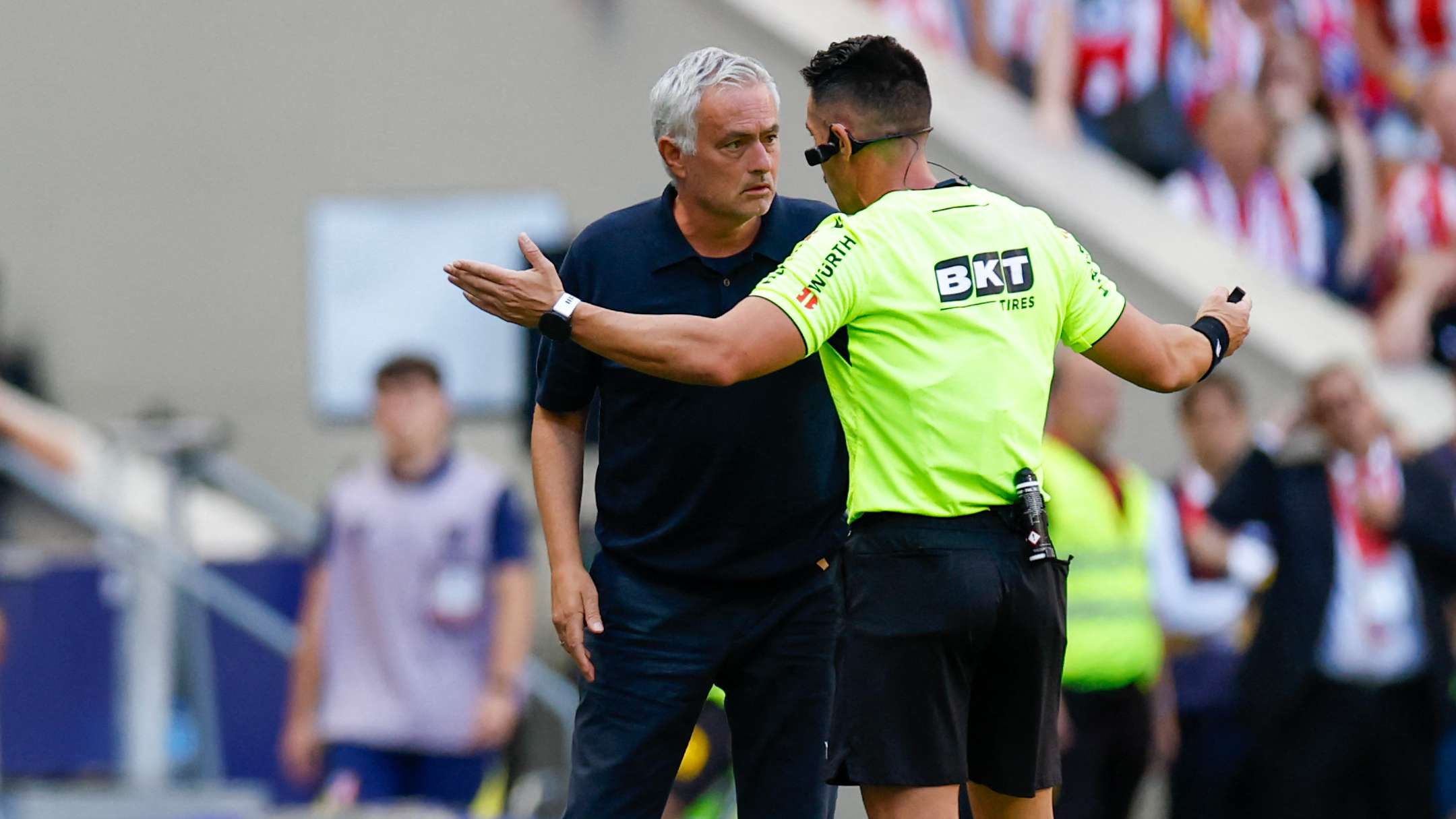
Following the recent Madrid derby, Jose Mourinho, one of the most decorated and outspoken managers in football history, voiced strong criticisms of the match officials. In his post-match interviews, Mourinho accused referees of bias and alleged that systemic pressure was being exerted on match officials to influence the outcome of crucial games. His comments echoed concerns about the transparency and fairness of officiating in La Liga and Spanish football at large.
Mourinho’s critique was not limited to isolated incidents but suggested a pattern of favoritism that, in his view, undermines the sport’s integrity. Such outspoken remarks from a manager of his stature tend to resonate widely, prompting debates among fans, pundits, and governing bodies about the need for reform and greater accountability in refereeing standards.
Atletico Madrid’s Strong Response: Defending the Integrity of Football
In stark contrast to Mourinho’s outspoken stance, Atlético Madrid issued a forceful rebuttal emphasizing the importance of fair play and the independence of match officials. The club’s official statement condemned what they described as “systematic pressure” on referees, warning that such tactics threaten to erode the very foundations of domestic football in Spain.
“We call for an immediate end to these orchestrated attempts to influence refereeing decisions,” the Atlético Madrid statement declared. “The integrity of the game must be preserved for the benefit of players, coaches, fans, and the sport’s future. Any form of pressure or manipulation undermines the spirit of fair competition and jeopardizes the credibility of La Liga.”
This firm stance underscores Atlético Madrid’s commitment to upholding the principles of transparency and fairness, particularly in a league where controversial decisions have often sparked heated debates. The club’s leadership emphasized that they will continue to support referees and officials who strive to officiate with impartiality, free from external influence.
The Broader Implications for Football and Prediction Markets
The controversy surrounding officiating in the Madrid derby is more than just a matter of local pride; it has wider implications for the sport’s global ecosystem, especially in the realm of football prediction and betting markets. Accurate and transparent officiating is crucial for bettors, analysts, and fans who rely on fair assessments to inform their predictions about match outcomes.
When refereeing decisions are perceived as biased or manipulated, it not only damages the credibility of the league but also impacts the accuracy of football predictions. Predictive models, which analyze historical data, player performance, and tactical trends, depend heavily on the assumption that matches are officiated fairly. Any doubts cast on refereeing integrity can introduce biases into these predictions, leading to less reliable forecasts and potential financial losses for betting companies and punters alike.
Moreover, high-profile disputes like this can influence betting markets by increasing volatility and unpredictability. As trust in the officiating process wanes, some bettors may feel compelled to hedge their bets or seek alternative betting options, which can distort the betting landscape and challenge the credibility of prediction models.
The Role of Governance and Future Outlook
Addressing these concerns requires concerted efforts from football governing bodies, including the Royal Spanish Football Federation (RFEF) and La Liga officials. Implementing measures such as increased referee training, video assistant referee (VAR) technology, and transparent review processes are essential steps toward restoring trust and ensuring the integrity of the game.
Additionally, fostering a culture of accountability and open dialogue between clubs, officials, and fans can help mitigate tensions and promote a fair playing environment. As the sport continues to evolve technologically and strategically, maintaining the independence and impartiality of referees remains paramount for the future of football prediction accuracy and the overall health of the game.
Conclusion: The Ongoing Battle for Fair Football
The recent exchange between Atletico Madrid and Jose Mourinho underscores the enduring tensions surrounding officiating in football, particularly in high-stakes fixtures like the Madrid derby. While Mourinho’s outspoken criticism has sparked debate about systemic biases, Atlético Madrid’s firm stance highlights the importance of protecting the sport’s integrity from external pressures.
For fans and prediction enthusiasts alike, these developments serve as a reminder of the fragile balance between competitive fairness and external influences. As the quest for more accurate football predictions continues, ensuring transparent and fair officiating remains a critical pillar for the sport’s credibility and long-term growth.
Looking ahead, stakeholders across the football community must work together to reinforce integrity, leverage technological advancements like VAR, and promote a culture where fair play is non-negotiable. Only then can the beautiful game truly thrive, free from undue influence and with predictions rooted in genuine sporting excellence.