
Refereeing Controversy Dominates Madrid Derby: A Closer Look at the Explosive First Half
The highly anticipated Madrid derby between Real Madrid and Atlético Madrid erupted into chaos and controversy during the first half of the seventh round of the Spanish La Liga season. From the very first whistle, the match was characterized by aggressive tackles, heated protests, and contentious refereeing decisions that left fans and pundits debating long after the whistle. This intense opening act has significant implications for football predictions and the overall narrative of the season, highlighting the unpredictable nature of football and the importance of fair officiating.
Early Incidents Set the Tone for a Tumultuous Half
Just five minutes into the game, a controversial challenge by Atlético Madrid’s Alex Baena on Arda Güler of Real Madrid ignited the controversy. Former Spanish referee Iturralde Gonzalez immediately expressed his opinion, asserting that Baena’s foul warranted a yellow card. Gonzalez explained, “He struck him with his knee from behind—a clear foul and a deserved booking.” This incident set the tone for a first half filled with difficult decisions and heated exchanges.
In response, Atlético Madrid’s head coach, Diego Simeone, protested vehemently against Güler’s reaction to the challenge. The tension escalated as Simeone was shown a yellow card for his protests, underscoring how emotions ran high during the match. Güler, meanwhile, appeared visibly frustrated and was involved in subsequent altercations with Baena, notably in the 18th minute. Despite the repeated confrontations, the referee chose not to issue any further cards at that point, leading to debates over consistency and fairness in officiating.
Controversial Decisions Spark Debate Among Football Experts
Commentator and former referee Iturralde Gonzalez analyzed these incidents, emphasizing that Baena’s knee use was particularly dangerous. He pointed out that the referee’s decision to overlook the foul was inconsistent, especially given that Baena’s action was more reckless than other tackles earlier in the game. Gonzalez also criticized the booking of Simeone, arguing that the manager’s protests did not justify the yellow card, and highlighted the protests from Real Madrid’s substitutes as further proof of the tense atmosphere.
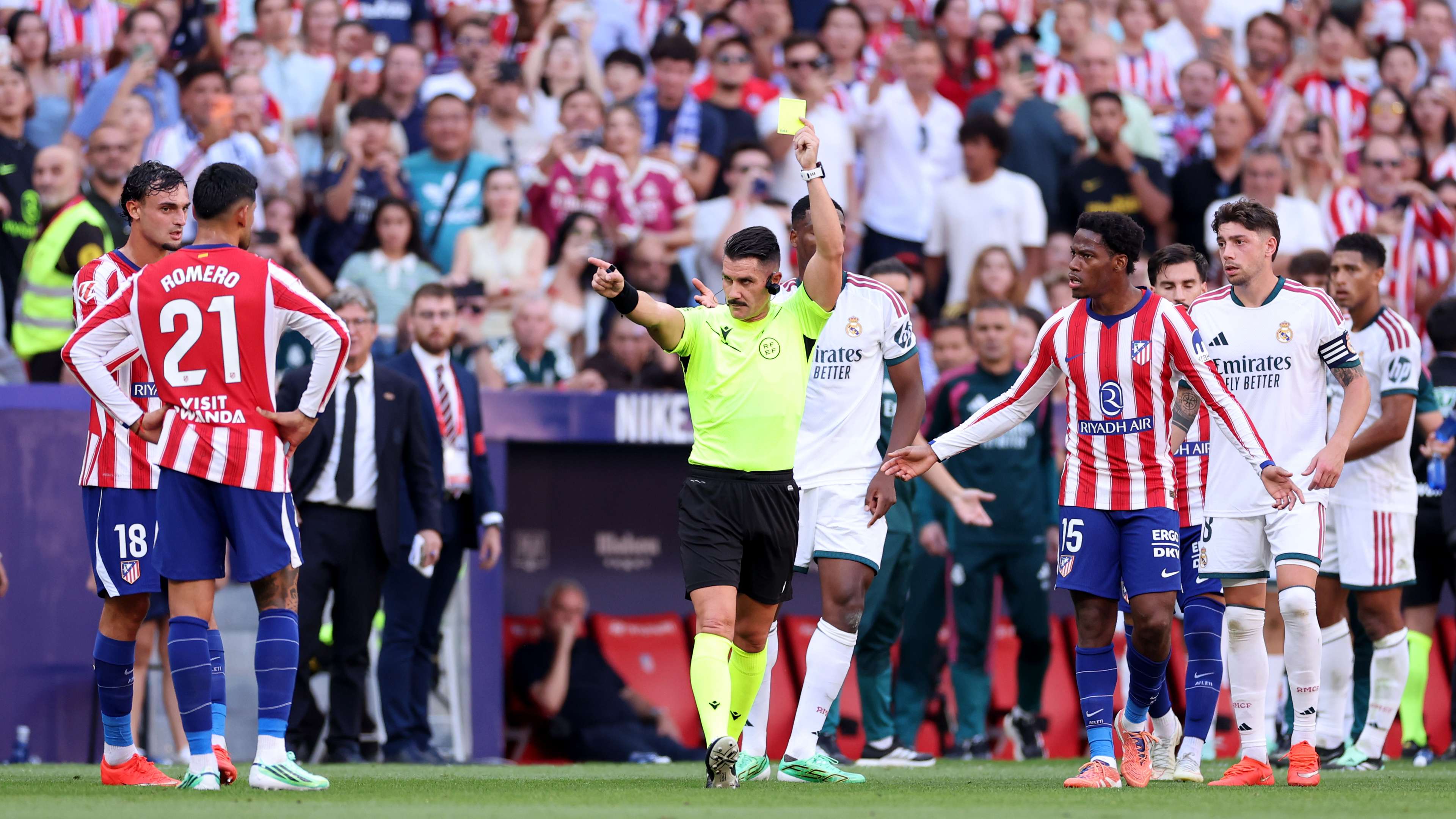
As the match approached the 35th minute, tensions intensified further. Atlético’s Pubill received a booking for halting a promising Kylian Mbappe counter-attack, adding to the mounting disciplinary issues. Just a minute later, the situation reached a boiling point when Jude Bellingham challenged Cuti Romero, resulting in a contact that sparked immediate controversy. The referee, Ortiz Arias, initially awarded a yellow card to Bellingham, but upon consultation with VAR official Trujillo Suarez, the decision was overturned. The yellow card was then shown to Romero instead, a move that drew sharp criticism from football analysts.
The Debate Over Romero’s Challenge and the Need for Correct Officiating
Iturralde Gonzalez argued that Romero’s challenge was worthy of a red card. He described the play, stating, “Romero tried to reach the ball with his foot planted firmly—this is reckless and dangerous.” Gonzalez emphasized that such tackles, which lack a pull-back or control, pose serious injury risks and should be disciplined more harshly. The inconsistency in officiating, he maintained, undermines the integrity of the game and impacts football predictions, as bettors and fans rely heavily on fair and accurate decisions.
Heavy Tackle Sparks Further Controversy and Raises Injury Concerns
The heavy tackles did not cease. Moments after the Romero incident, Kang-in Lee committed a high, aggressive challenge on Federico Valverde from behind. Remarkably, this tackle went unpunished, prompting further criticism from Iturralde Gonzalez. The former referee expressed concern that the challenge was both reckless and potentially dangerous, raising fears of serious injuries and calling for stricter enforcement of rules to protect players.
This tumultuous first half ended amidst a cloud of contentious refereeing decisions, aggressive challenges, and protests from players and coaching staff alike. The match’s opening 45 minutes not only showcased the fierce rivalry between Madrid’s two giants but also highlighted ongoing issues within football officiating—a topic that remains central to many predictions about future fixtures and the overall season outlook.
Implications for Football Prediction and Future Match Expectations
The chaos and controversial refereeing in this Madrid derby have significant implications for football prediction models. Accurate predictions depend heavily on understanding team form, tactical setups, and, crucially, the fairness of officiating. When referees make contentious decisions, it can sway the outcome of a game and, consequently, affect betting markets and analytical forecasts.
Football experts and enthusiasts now face the challenge of assessing the impact of such refereeing controversies on team morale, player discipline, and match outcomes. The first-half incidents suggest that both teams are operating in a highly charged environment, which could lead to more unpredictable results in upcoming fixtures. Bettors and analysts should keep a close eye on how refereeing standards evolve and whether authorities implement measures to reduce such controversies in future matches.
Broader Context: The Role of VAR and Refereeing Standards in Modern Football
This intense Madrid derby exemplifies the ongoing debate regarding VAR’s effectiveness and the consistency of refereeing standards across top European leagues. While VAR has been introduced to minimize human error, its application remains subjective, often leading to debates similar to those seen in this match. The controversy over Romero’s challenge, in particular, underscores the importance of transparent and consistent officiating to maintain the sport’s integrity.
As football continues to grow globally, the importance of accurate, fair refereeing becomes even more critical. Fans and analysts alike are calling for improved training, clearer guidelines, and technological enhancements to assist referees in making the right decisions—ultimately impacting football prediction models and the sport’s overall health.
Conclusion: A Memorable First Half with Lessons for the Future
The first half of the Madrid derby will be remembered not only for its passionate rivalry but also for the refereeing controversies that overshadowed the game. Heavy challenges, protests, and contentious decisions have sparked widespread discussion about officiating standards in football. For fans, bettors, and analysts, understanding these dynamics is crucial for making accurate predictions and appreciating the sport’s unpredictable nature.
As the season progresses, all eyes will be on how refereeing standards evolve and whether lessons from high-profile matches like this lead to meaningful improvements. One thing is certain: in football, unpredictability is part of the game’s allure, and every match continues to be a rollercoaster of emotions, surprises, and valuable insights for those who study the beautiful game.