

Disciplinary Drama in AFC Champions League: Summerville’s Red Card Sparks Controversy and Future Uncertainty
In a heated clash during the opening round of the AFC Champions League Elite, a fiery incident involving Al-Hilal’s Crysencio Summerville has sent ripples through the football community. The Dutch winger was shown a straight red card following a tumultuous altercation with Al-Gharafa’s Ismaël Bennacer, raising questions about disciplinary protocols, player conduct, and the impact on upcoming fixtures.
Unraveling the Incident: A Clash of Temperaments and Tensions
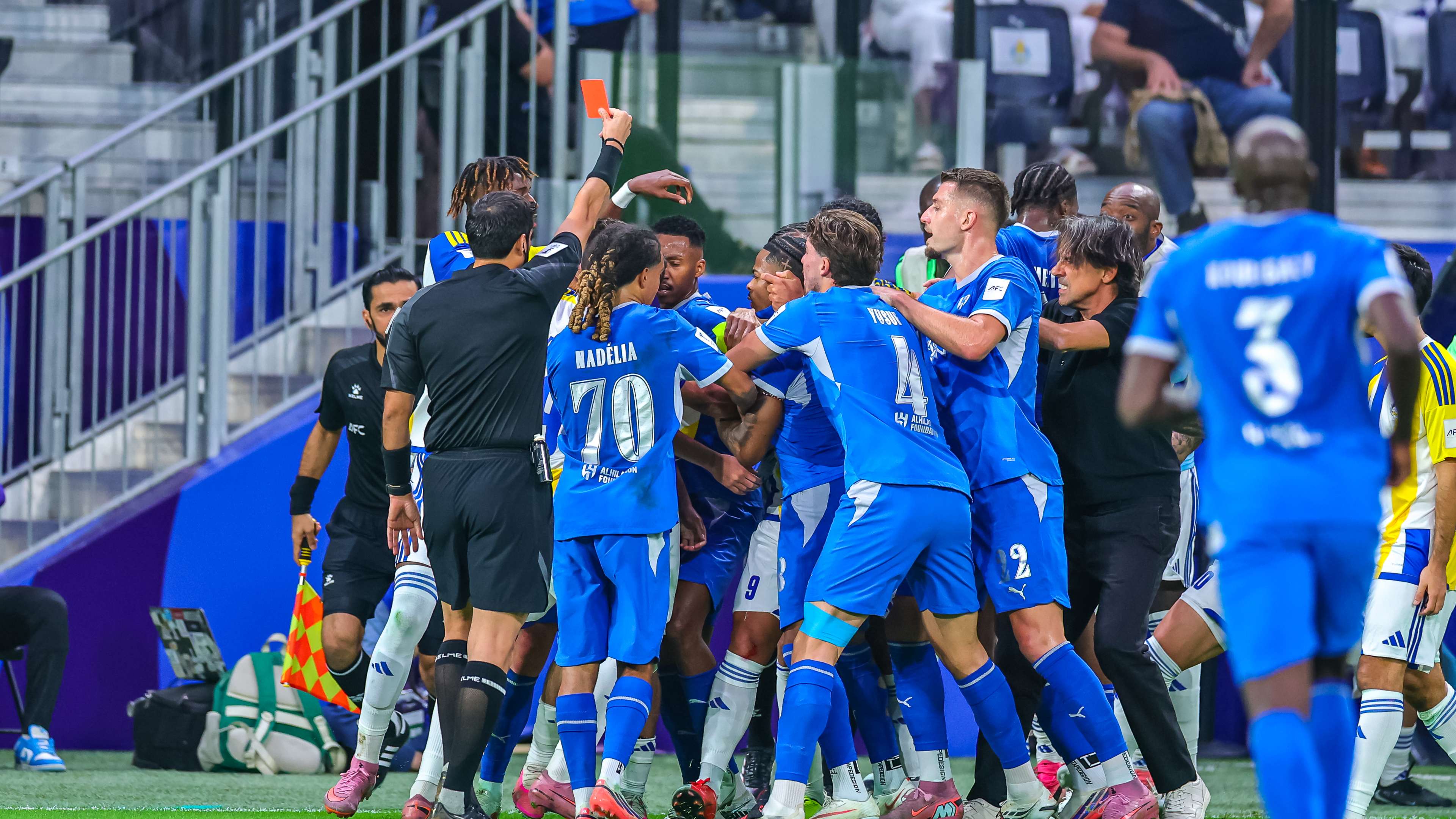
The incident unfolded in the 32nd minute of the match between Al-Hilal and Al-Gharafa, two prominent teams vying for continental supremacy. Summerville, known for his pace and creativity on the field, became the center of controversy after a provocative exchange that escalated rapidly. The incident began when Summerville clashed with Al-Gharafa’s Abdulrahman Al-Rashidi, grabbing him by the shirt and forcefully shoving him off the pitch. The altercation quickly ignited a frenzied scene, with players rushing to defuse the situation.
However, the situation intensified when Ismaël Bennacer, making his debut for Al-Gharafa, intervened. The Algerian midfielder responded by grabbing Summerville by the head and pulling him forcefully, a move that intensified the chaos. The fracas culminated in a mass melee, with players and officials trying to restore order amidst the chaos. The referee, perceiving the severity of the incident, promptly showed Summerville a straight red card for violent conduct.
The Aftermath: Disciplinary Measures and Future Consequences
Following the incident, the Asian Football Confederation’s (AFC) disciplinary committee issued a formal letter requesting an explanation of the circumstances surrounding Summerville’s red card. Such measures are standard practice in high-stakes tournaments where player conduct can influence the integrity of the game and the reputation of the competition.
Meanwhile, reports from Saudi newspaper “Okaz” confirmed that Summerville’s suspension is already in effect for Al-Hilal’s upcoming fixture against Qatar’s Al-Sadd. The automatic one-match ban means the Dutch winger will be unavailable for the next match. However, there is speculation that the disciplinary review could extend the ban by up to two additional matches, depending on the final report from the referee and the AFC disciplinary panel.
Player Background: From Feyenoord to the Middle East
Crysencio Summerville’s professional journey traces back to the Netherlands, where he began his career at Feyenoord, showcasing his talent in the Eredivisie. His impressive performances earned him recognition, leading to moves across Europe’s competitive leagues. Notably, he had spells at Leeds United and West Ham United in England, where his agility and attacking prowess made him a standout. His transfer to Al-Hilal marked a new chapter in his career, as he sought to establish himself in Asian football’s premier club competition.
The Significance of the Incident in the Context of Football and Prediction
This incident underscores the importance of discipline and sportsmanship in football, especially in high-pressure tournaments like the AFC Champions League. Player conduct not only influences the immediate outcome of a match but also shapes team strategies and predictions for future fixtures. Analysts and fans often factor in disciplinary histories when making football predictions, as suspensions can significantly alter team dynamics and betting odds.
Moreover, such incidents highlight the need for referees and officials to maintain composure and enforce rules consistently. A well-managed game preserves the integrity of the sport, ensuring that talent and tactical prowess remain the key determinants of success rather than avoidable altercations.
Expert Insights and Future Outlook
Football experts emphasize that while passion and competitive spirit are intrinsic to the game, players must balance aggression with professionalism. The AFC’s disciplinary actions serve as a reminder that violent conduct can have lasting repercussions, potentially affecting a player’s career trajectory and a team’s performance in pivotal matches.
Looking ahead, Al-Hilal will need to adapt their tactical approach in Summerville’s absence. The club’s ability to maintain offensive potency without their key winger will be tested in upcoming fixtures, including the crucial match against Al-Sadd. For fans and bettors, understanding the disciplinary landscape and predicting how suspensions impact team strategies is vital for making informed predictions about match outcomes.
Community Engagement and Discussions
Fans and analysts are encouraged to join the ongoing discussions in forums such as Kooora, where football enthusiasts dissect incidents like this, debate disciplinary measures, and share predictions for upcoming matches. The incident has sparked conversations about player conduct, the role of referees, and the broader implications for Asian football’s reputation on the international stage.
Final Thoughts: A Lesson in Discipline and the Beautiful Game
The fiery clash involving Summerville and Bennacer exemplifies how emotions can run high in football, especially in competitions that attract global attention. While passion fuels the sport, maintaining discipline is essential to uphold the integrity and fairness of the game. As the AFC investigates the incident and determines additional sanctions, players, teams, and fans alike are reminded of the delicate balance between competitive spirit and sportsmanship.
Ultimately, this episode serves as a testament to the unpredictable and thrilling nature of football, where prediction and analysis must always account for human factors—passion, temperament, and discipline. As the tournament progresses, all eyes will be on how teams adapt and whether disciplinary measures influence the path to continental glory.